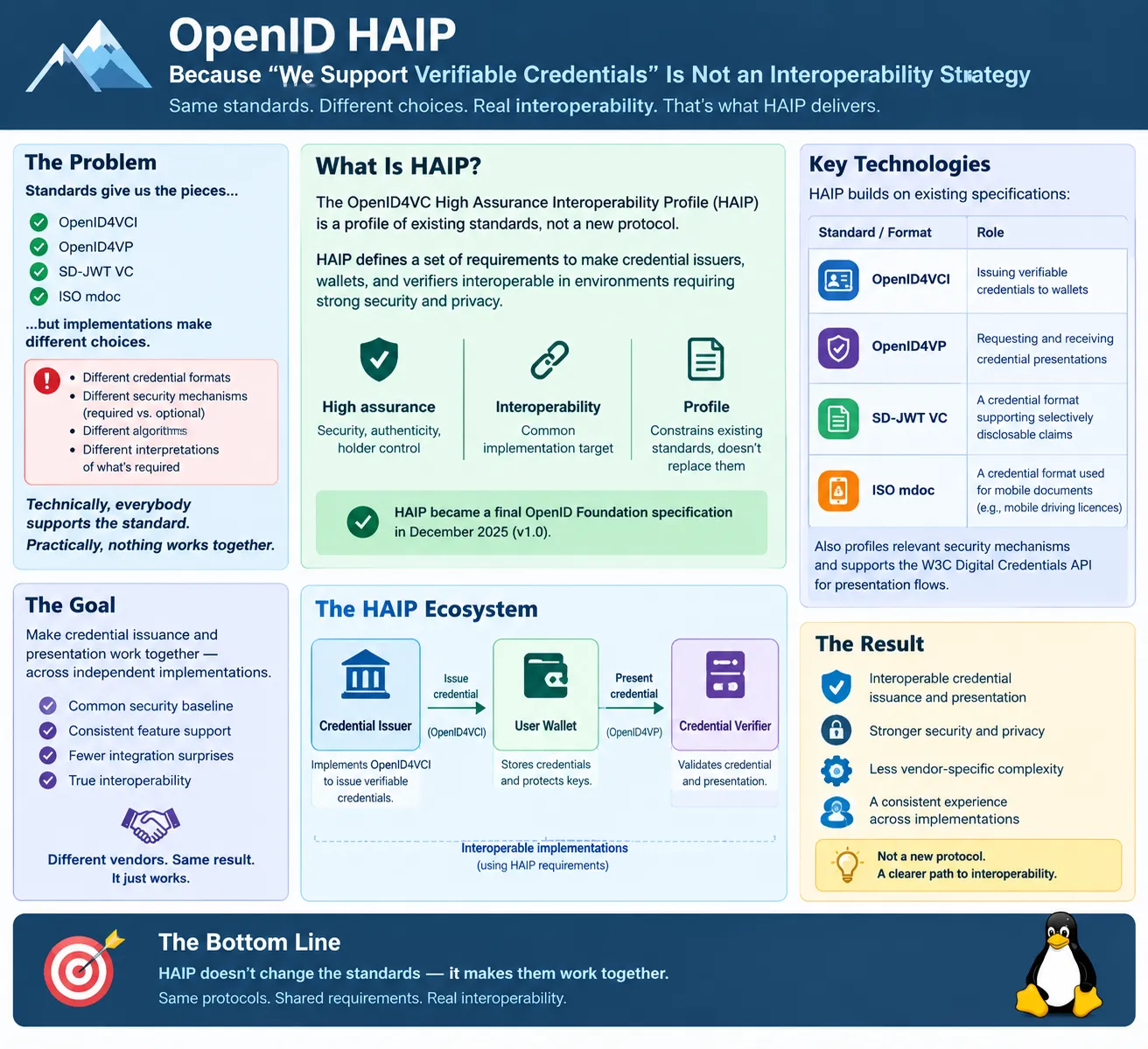
OpenID HAIP: “We Support Verifiable Credentials” Is Not an Interoperability Strategy
There is a recurring problem in identity standards.
Read article: OpenID HAIP: “We Support Verifiable Credentials” Is Not an Interoperability StrategyNotes on application security, API security, identity, and API management from the field. Articles are also published on Medium. Browse the archive by topic instead — 124 subjects.
There is a recurring problem in identity standards.
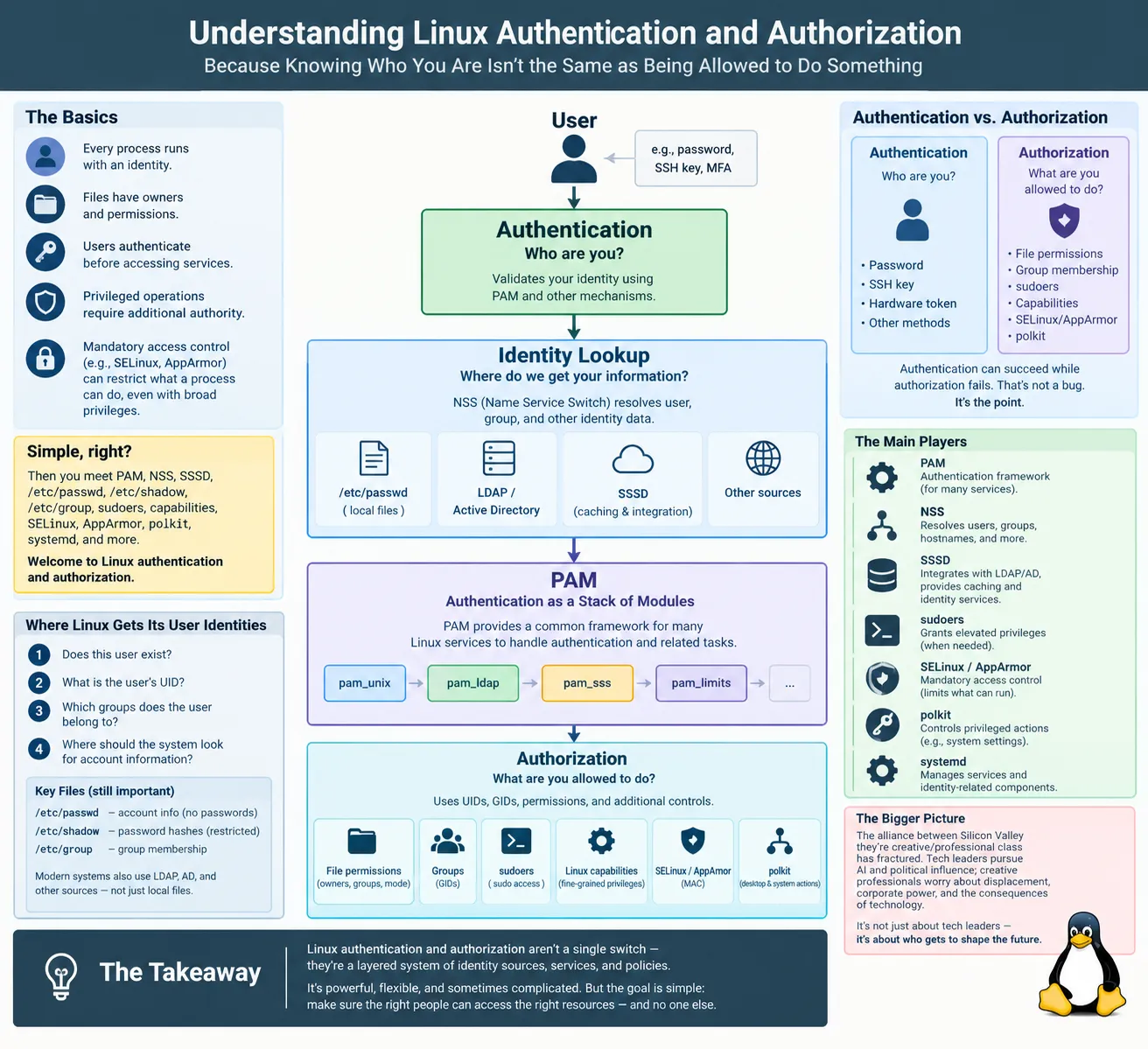
Read article: OpenID HAIP: “We Support Verifiable Credentials” Is Not an Interoperability StrategyLinux has a fairly straightforward security model. Every process runs with an identity. Files have owners and permissions. Users authenticate before accessing services. Privileged operations require additional authority. And if those controls aren’t sufficient, mandatory access control can restrict…
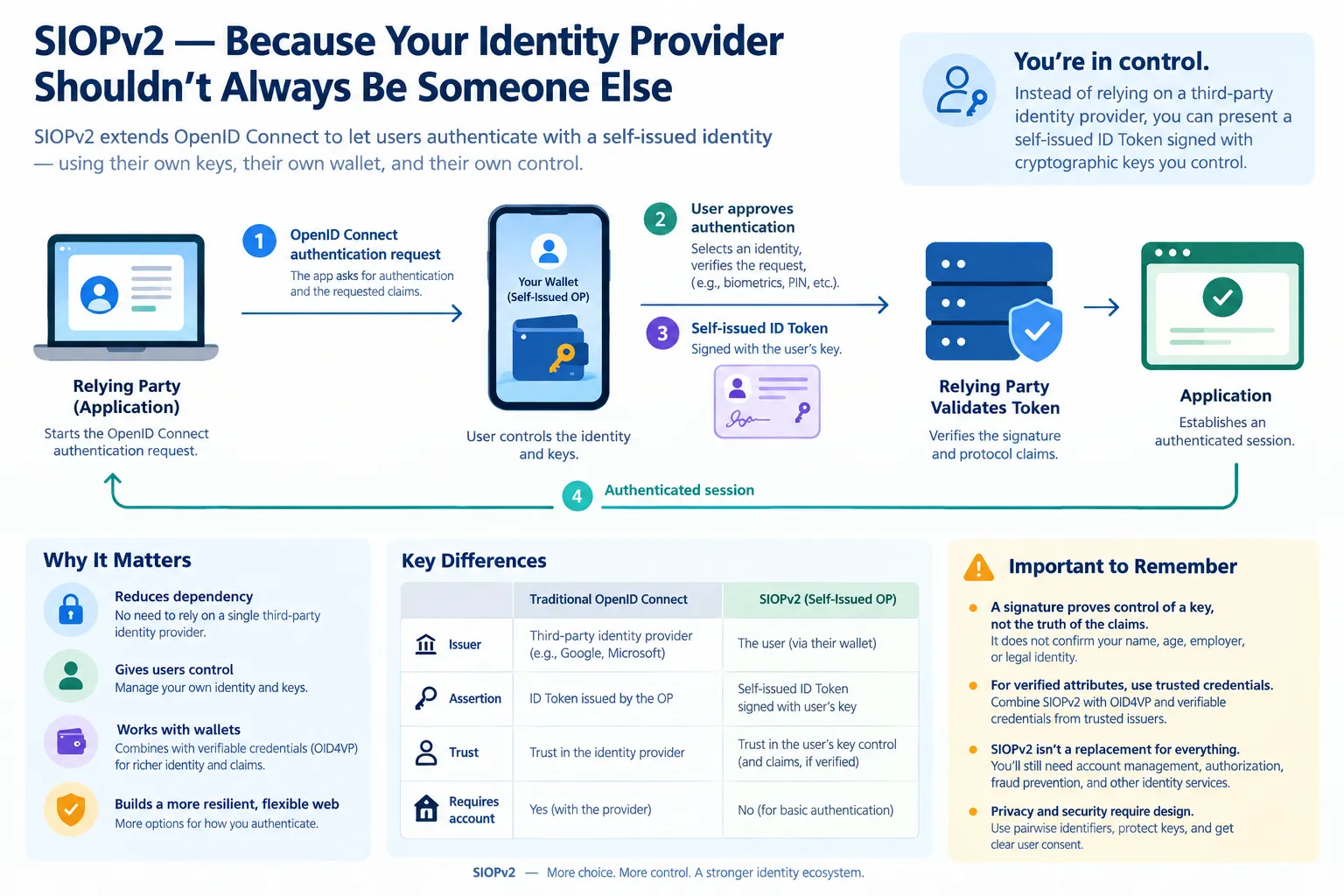
Read article: Understanding Linux Authentication and AuthorizationThe OpenID Foundation has published a family of specs that are collectively referred to as OID4VC (or OpenID4VC) — OpenID For Verifiable Credentials. I’ve previously written posts about OID4VCI and OID4VP.
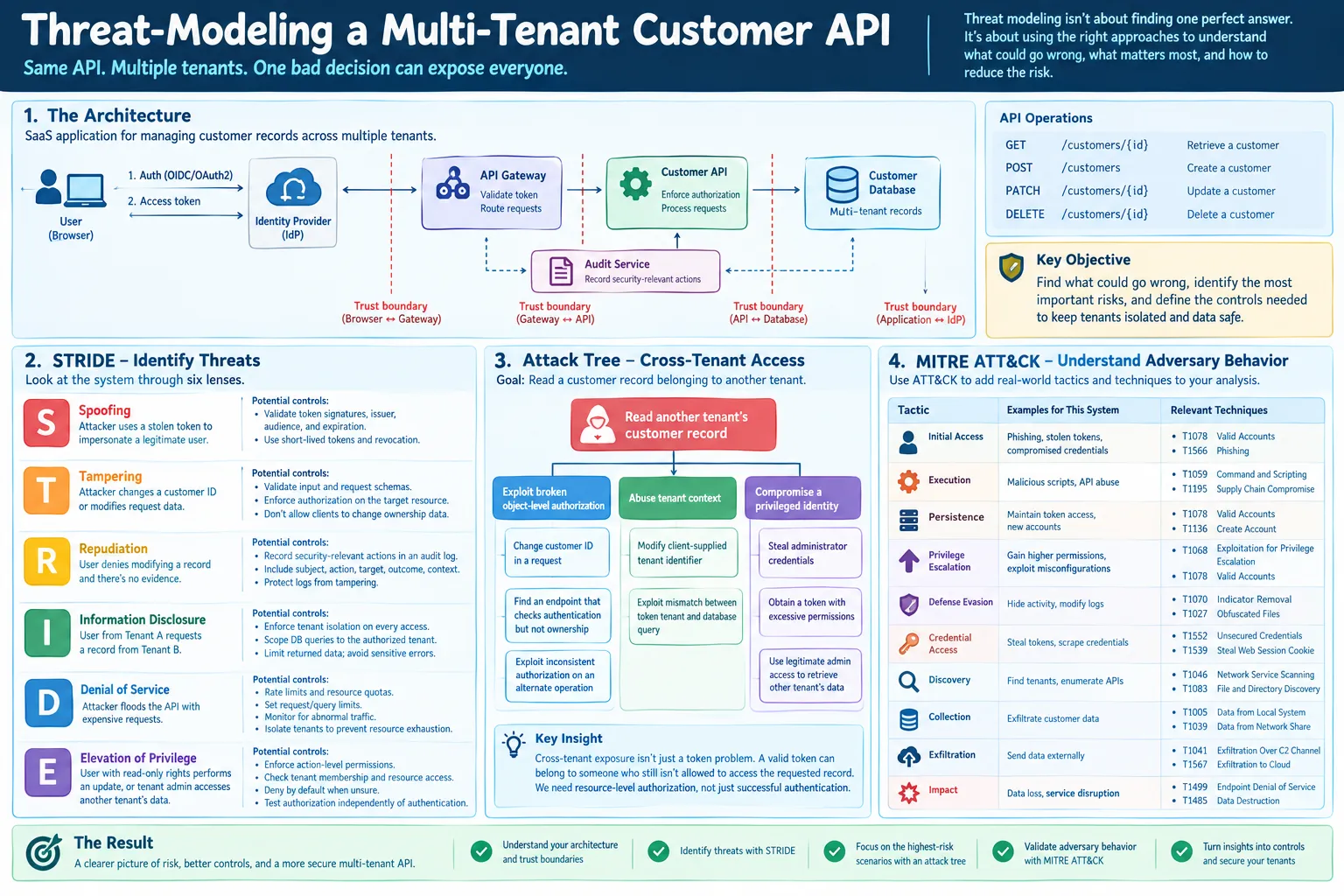
Read article: SIOPv2 — Because Your Identity Provider Shouldn’t Always Be Someone ElseIn the last post, we explored the various threat modeling approaches the industry has defined. Let’s put these approaches to work on a realistic system.
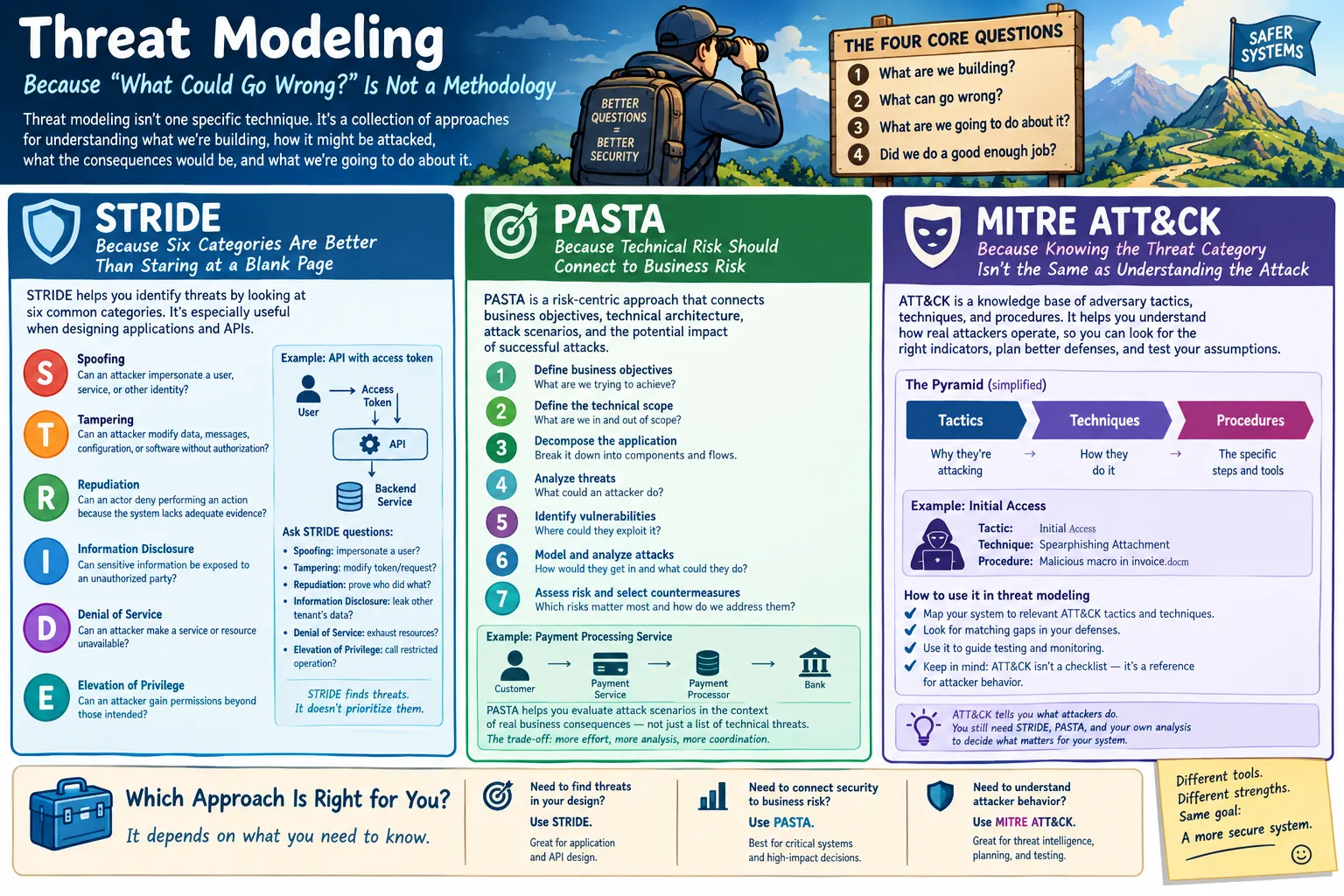
Read article: A Practical Example: Threat-Modeling a Multi-Tenant Customer APIThreat modeling is one of those security practices that everybody agrees is important, but not everybody agrees on how to do.
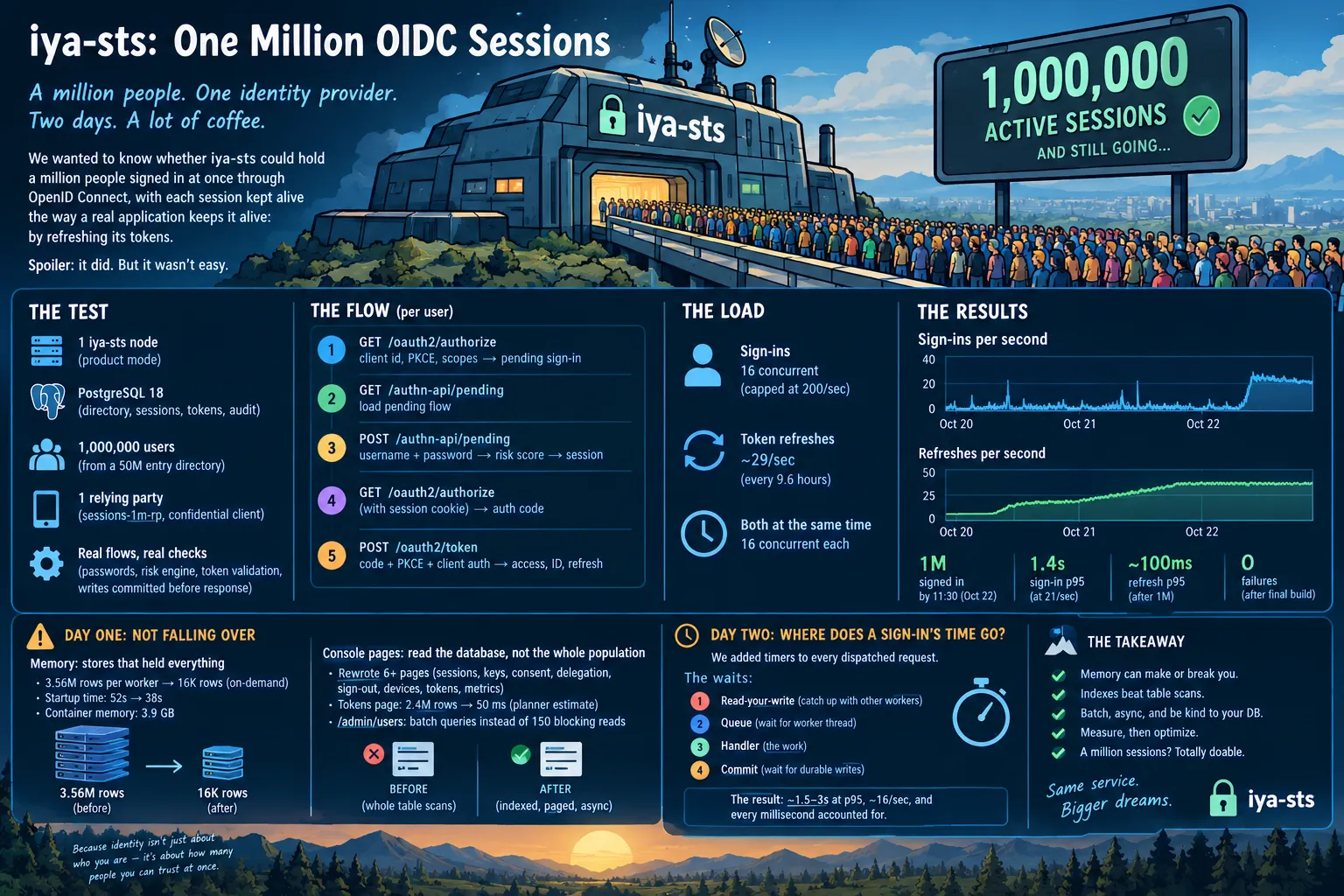
Read article: Threat Modeling — Because “What Could Go Wrong?” Is Not a MethodologyWe wanted to know whether iya-sts could hold a million people signed in at once through OpenID Connect, with each session kept alive the way a real application keeps it alive: by refreshing its tokens. Not a million token requests in a benchmark loop, but a million sessions, each started by a full…
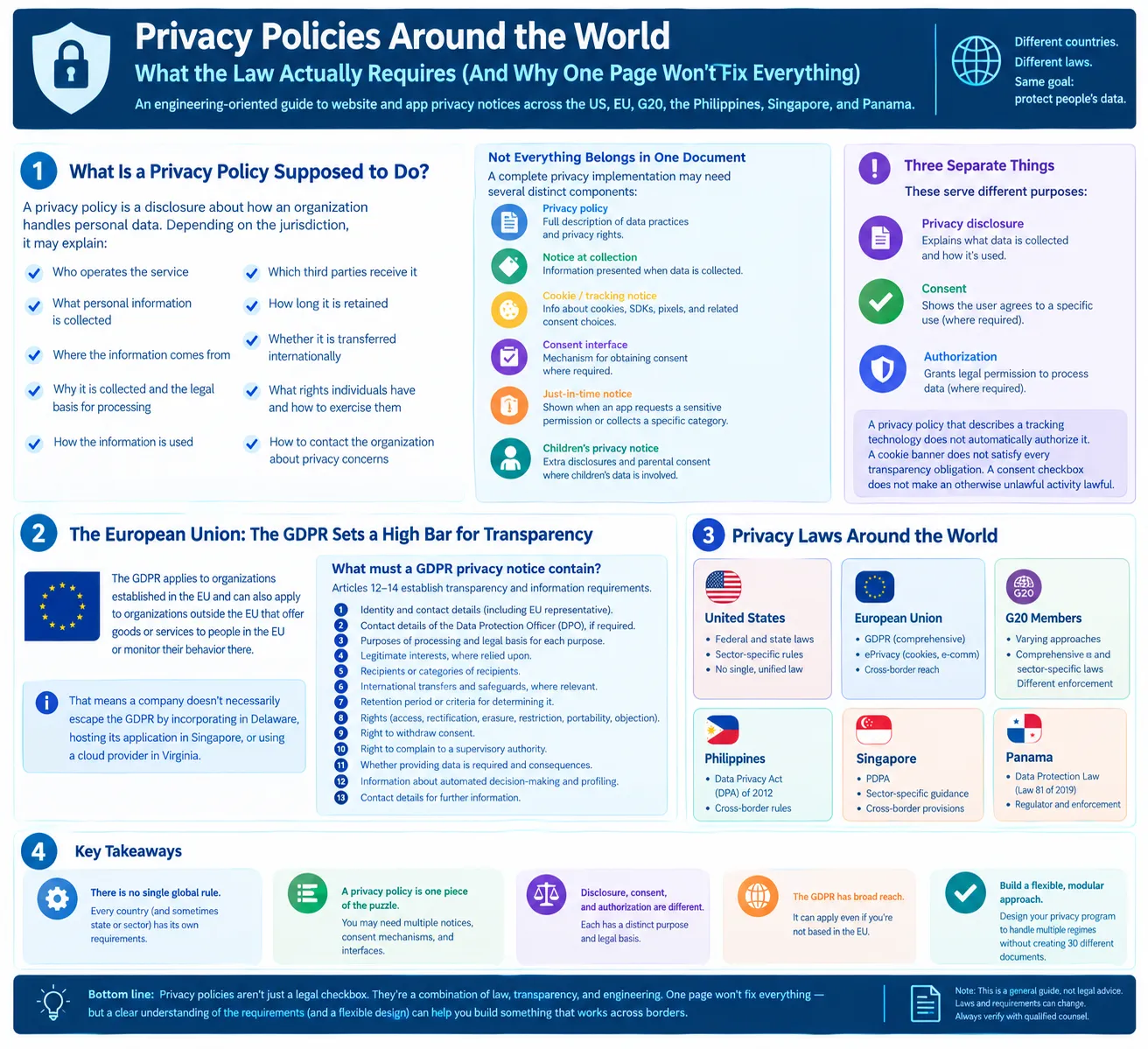
Read article: iya-sts: One Million OIDC SessionsAn engineering-oriented guide to website and app privacy notices across the US, EU, G20, the Philippines, Singapore, and Panama.
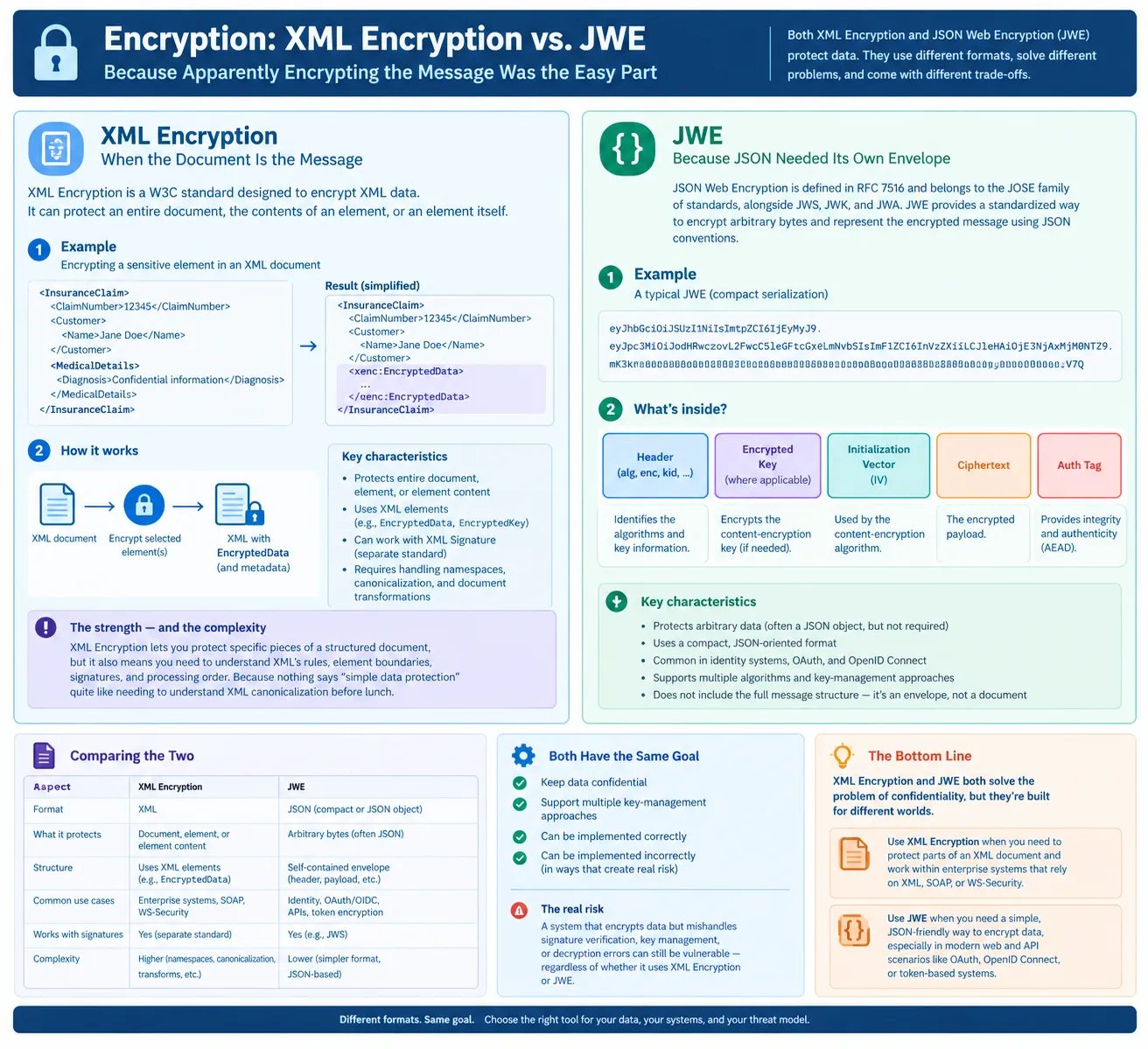
Read article: Privacy Policies Around the World: What the Law Actually Requires (And, Why One Page Won’t Fix Everything)Sometime around 2017, I did a number of blog posts on XML Digital Signature, JSON Web Encryption (JWE), and digital signature concepts in general. After that, I was all set to do a whole series on encryption. Instead, I lost interest in that topic and dug deeper into OAuth2 + OIDC. With the recent…
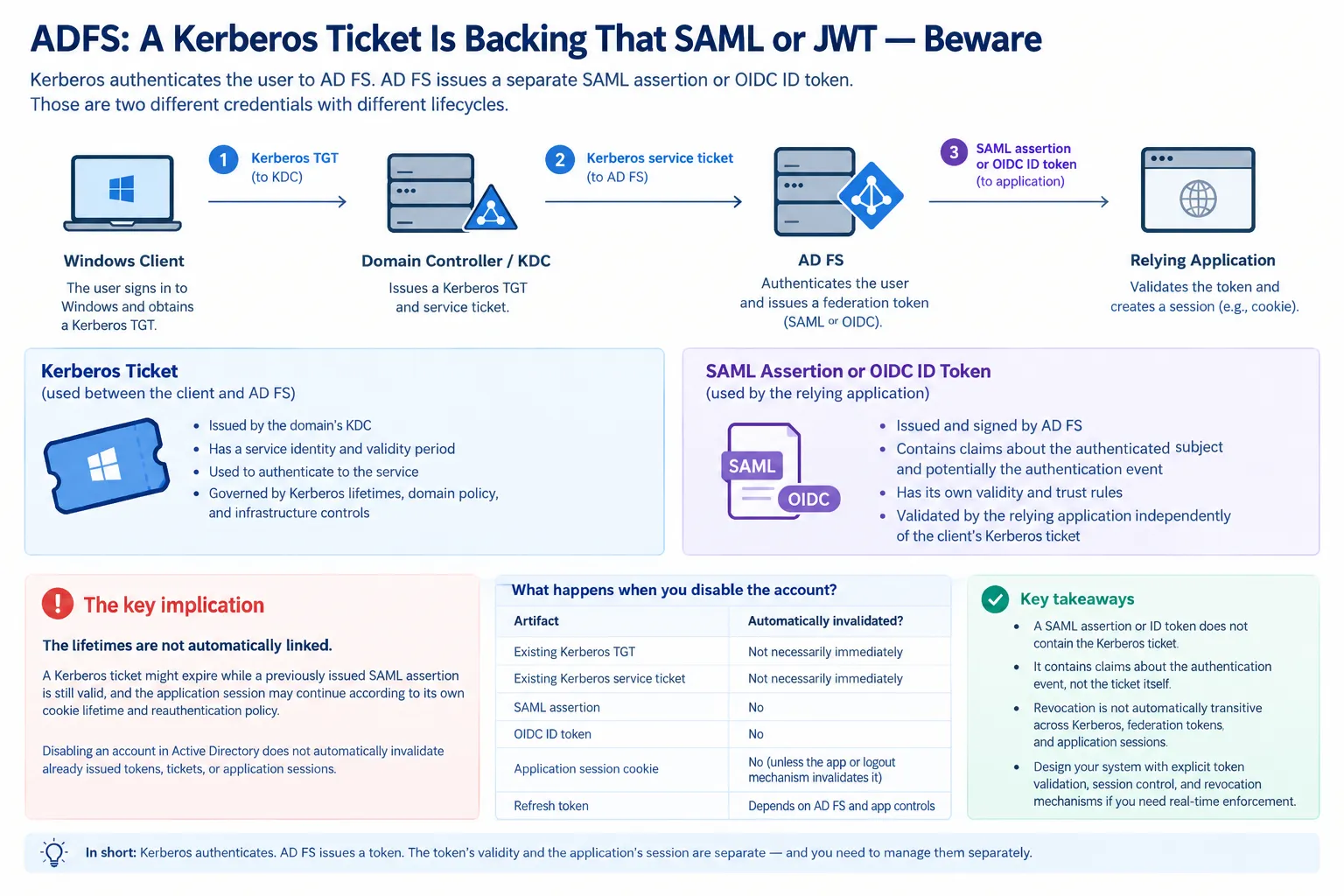
Read article: Encryption: XML Encryption vs. JWE: Encrypting the Message Was the Easy PartOne of the more dangerous assumptions in federated identity is that the security properties of the original authentication mechanism somehow carry forward into the token issued by the federation service.
Read article: ADFS: A Kerberos Ticket Is Backing That SAML or JWT — BewareAnyone that has been reading my posts for a while knows that I like to explore the history of what led to the current state of a technology. It tells you a lot about the problems it is trying to solve. I’ve had this as a draft post since I created the Windows / Kerberos Series a while ago. That may…
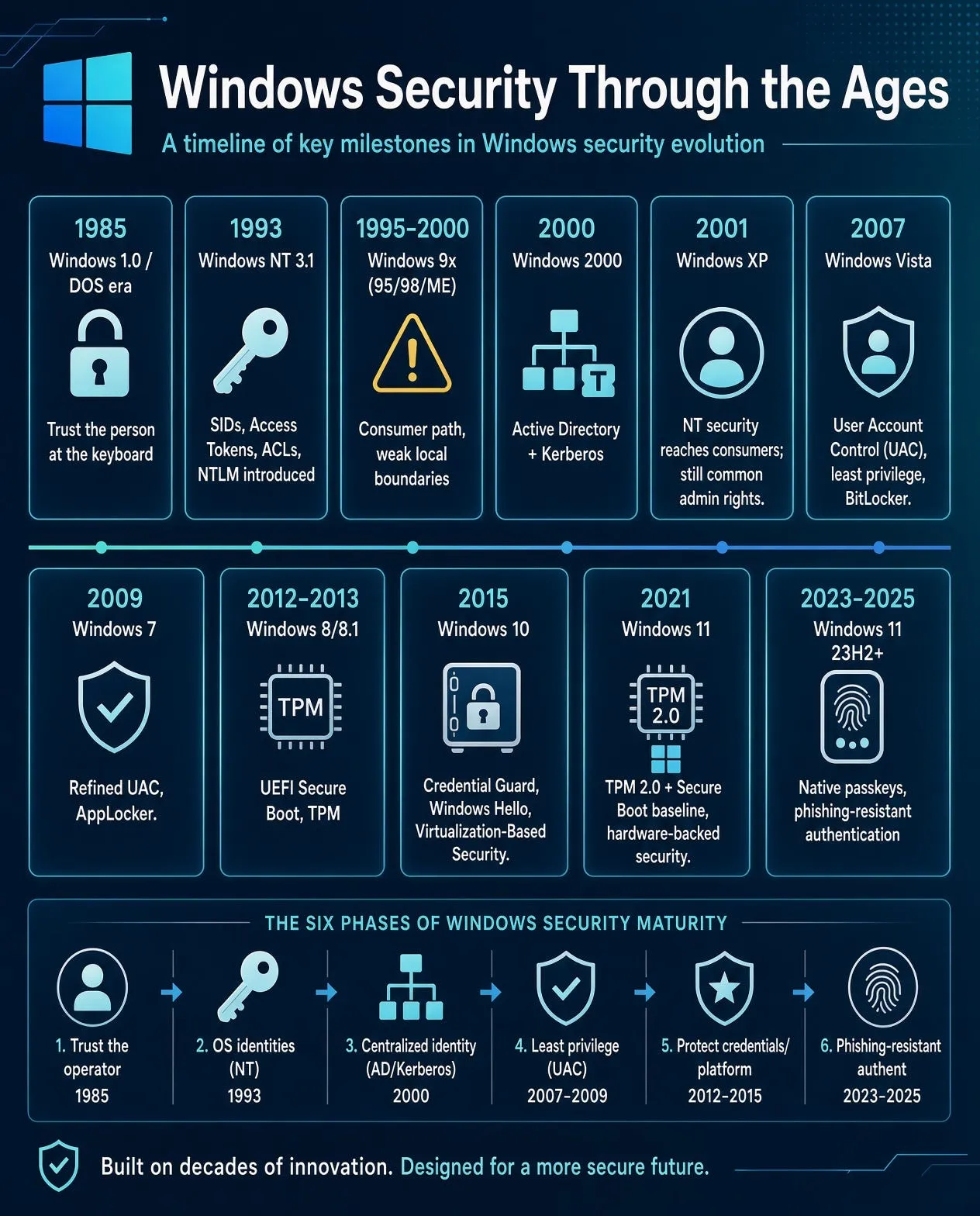
Read article: Windows Security Through the Ages — Because a Login Prompt Isn’t a Security BoundaryLooking for something specific? Browse all 124 topics.